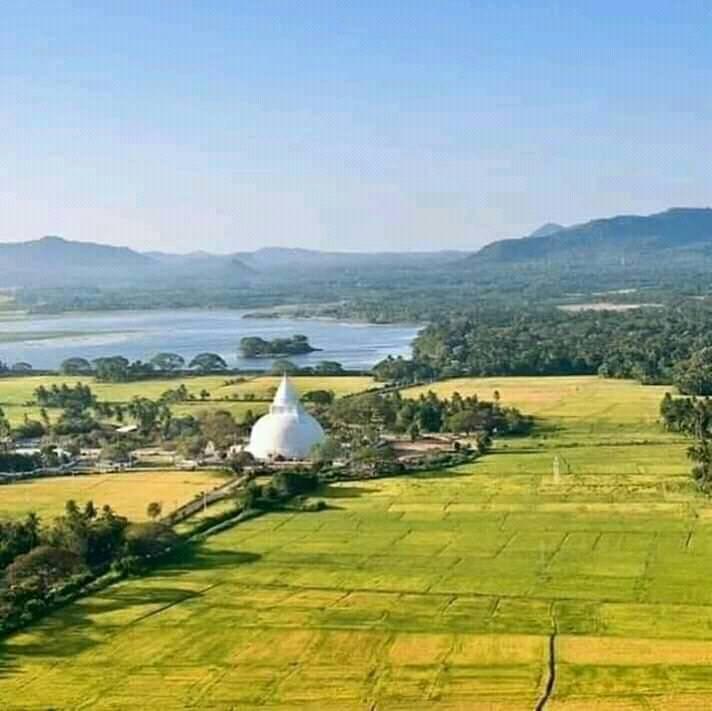
The ruins of Sri Lanka’s ancient kingdom are not a collection of isolated monuments; they are a unified, spiritual landscape. At the heart of this landscape lies the symbiotic pairing of the Wewa (the massive man-made reservoir) and the Dagoba (the giant Buddhist stupa).
This relationship—often called the “Tank and Temple” (The Quadruple of Wewa, Dagoba, Village, Temple) system—was the ingenious blueprint for a civilization that flourished in the dry zone for over a millennium. For the modern wellness seeker, this duality offers a profound lesson: that physical sustenance (water) and spiritual clarity (Buddhism) are inseparable in the pursuit of wholeness.
The Wewa: The Body of the Civilization
The Wewa, or tank, was the physical anchor of the kingdom. It represented the power of disciplined effort, foresight, and collective responsibility.
Real-World Example: Kala Wewa and the Yodha Ela
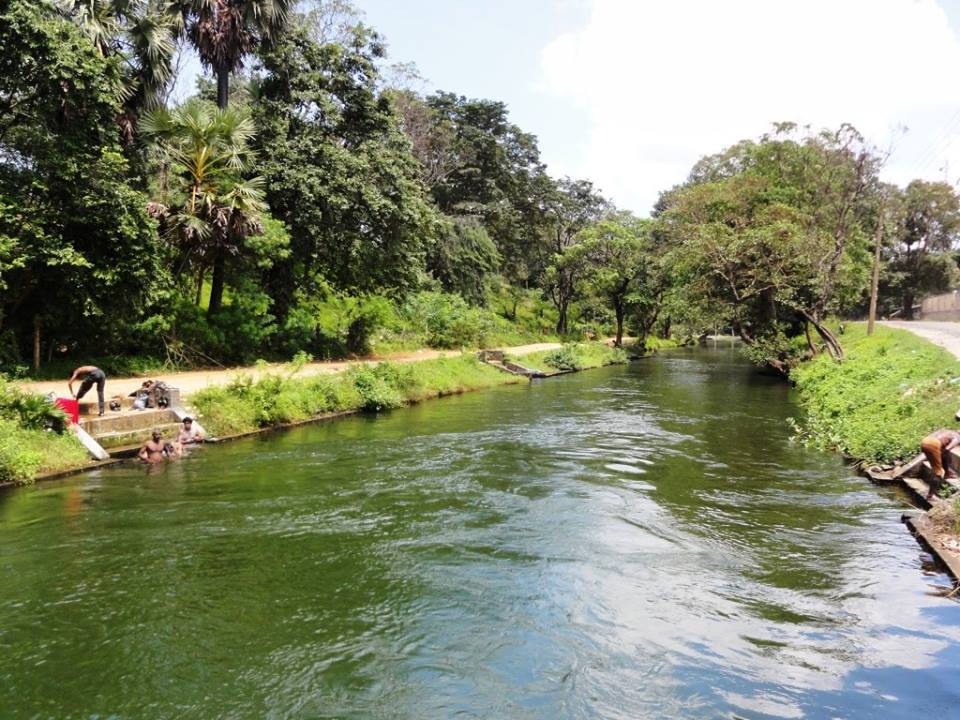
- The Scale of Discipline: Built by King Dhatusena in the 5th century, Kala Wewa (Kala Tank) is a colossal feat of engineering. More than just a local water source, it fed the capital city of Anuradhapura, over 80 kilometers away, via the Yodha Ela (Giant Canal).
- The Yodha Ela maintained an average gradient of just 9.5 centimeters per kilometer over the first 27 kilometers—a near-flat course. This required incredible precision, immense foresight, and unhurried patience over years of construction. It teaches us that true, sustainable well-being requires precision in effort and immense patience (like the farmer waiting for the slow, steady flow). The vast, still surface of the Kala Wewa embodies the mental calm achieved through consistent, intentional work.
The Dagoba: The Soul of the Civilization
The Dagoba (stupa) was the spiritual anchor. Its towering white dome, containing sacred relics, symbolized purity, peace, and the ultimate achievement of enlightenment.
Real-World Example: The Ruwanwelisaya and Tissawewa/Nuwara Wewa (Anuradhapura)
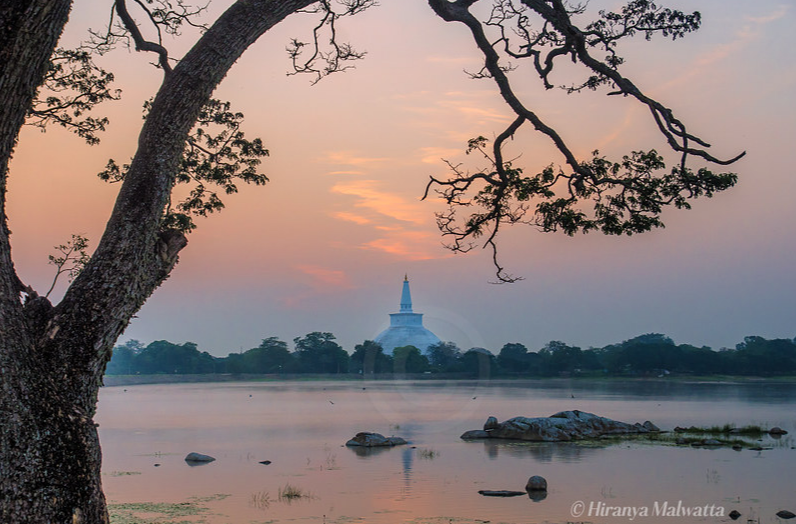
- The Proximity of Purpose: In Anuradhapura, the spiritual heart (the great Dagobas like Ruwanwelisaya and Jetavanaramaya) stands in immediate proximity to the massive tanks (Tissawewa and Nuwara Wewa).
- The tanks ensured the physical survival of the community (farmers, monks, and citizens) by irrigating the rice fields, allowing the society to dedicate its energy to spiritual pursuits. You cannot meditate if you are starving. The Dagoba’s massive white dome reflects the pure, intense light of the sun onto the still water of the Wewa below. This reflection symbolizes the soul’s ability to purify and reflect wisdom only when the body and community are nourished and stable. The simple ritual of walking barefoot around the maluwa (platform) of the Dagoba is a moment of pure, grounded spiritual connection.
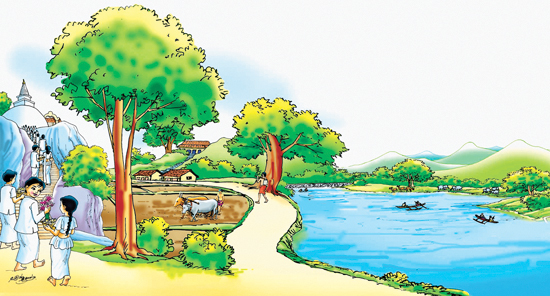
“The Wewa taught us discipline and sustenance; the Dagoba offered us the goal of serenity. Together, they form the only true equation for a whole, flourishing life.”
—TheWellness.travel
The Interdependency: An Energy Exchange
The Wewa and Dagoba were not just built near each other; they were fundamentally connected by the flow of resources and energy:
- The Flow of Offerings: The prosperity generated by the Wewa (abundant crops) funded the continuous maintenance and grand construction of the Dagoba (spiritual offerings). The earth nurtured the water, the water nurtured the people, and the people nurtured the spiritual centers.
- Water from the Wewa was often channeled through ceremonial baths and ponds (like the famous Kuttam Pokuna—Twin Ponds) within the monastic complexes. The act of bathing or cleansing with this life-sustaining water was a ritualistic purification, linking the physical act of getting clean with the spiritual act of shedding impurities (samsara).
For the traveler, simply standing on the high bund (embankment) of a Wewa like Tissawewa at dusk—watching the fishermen and the water buffalo in the reservoir, while the immense white dome of the nearby Dagoba glows softly in the distance—is to grasp the perfect synthesis of Sri Lankan life. It is the realization that true prosperity is the balance between physical life and spiritual light.