
The Journey for Peace
We book the flight, chase the sunset, and seek out new landscapes in the eternal hope of finding that perfect, stable state of peace. We yearn for the “good day,” not just today, but every day. But what if the profound happiness you seek isn’t waiting on a remote island or at the peak of a mountain? What if it’s the one piece of luggage you consistently forget to unpack?
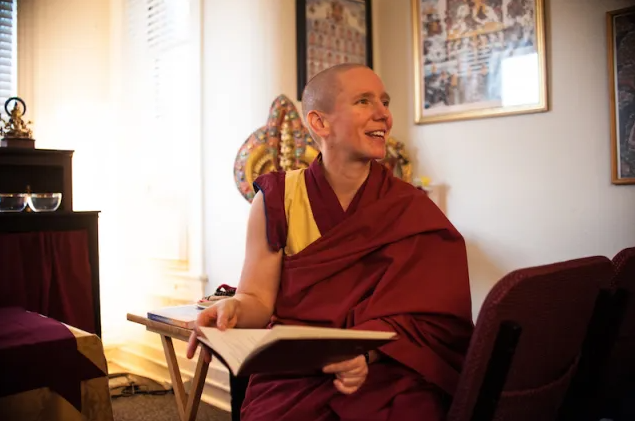
The wisdom shared by Gen Kelsang Nyema points to a revolutionary truth: Happiness is not an external itinerary; it is an internal state of being. The real destination for tranquility isn’t out there—it’s nestled deep within your own mind.
The Peril of Outsourced Joy
Many of us live with what we call Outsourced Happiness. We make our joy conditional, like a fleeting weather forecast.
- I will be happy when… (The promotion arrives, the vacation starts, the difficult colleague moves on.)
- I am unhappy because… (The flight was delayed, the boss was difficult, the weather spoiled the plan.)
As Gen Nyema explains, when our reasons for a “good day” are merely a list of external conditions, our mind becomes “like a balloon, blown here and there by external circumstances.” Your emotional stability is placed entirely in the hands of others—at the whim of traffic, unpredictable people, or the changing skies.
This reliance on the external creates a deeply unstable joy. You can arrive at the most beautiful spa retreat, but if your mind is agitated, true peace will remain impossible. Conversely, if your mind is peaceful, you can navigate even challenging circumstances with grace.
As profound wisdom states: “Happiness and unhappiness are states of mind and therefore their real causes cannot be found outside the mind.”
Your Two-Step Inner Itinerary
To stop being an emotional traveler constantly at the mercy of the elements, we must reclaim our inner power by mastering two essential practices:
Step 1: Stop Blaming. Stop Outsourcing.
We must first commit to ceasing the habit of attributing our happiness (and especially our unhappiness) to the people and circumstances around us. Stop making it the job of your partner, your job, or your travel destination to “make” you happy.
This is the ultimate freedom: Recognizing that it is not what is happening that makes us happy or unhappy, but how we are responding to those things. When you stop blaming, you take your power back from the outside world.
Step 2: Cultivate Your Inner Oasis.
The second, and perhaps most beautiful, task is to actively cultivate a stable source of peace and happiness coming from inside our own mind.
This is the creation of your inner sanctuary—a permanent oasis that remains undisturbed, regardless of external turbulence. We must deliberately choose, nourish, and concentrate upon peaceful, positive mental states.
The Passport to Peace: Meditation as Mental Action
How do we actually perform this mental cultivation? The essential tool is meditation.
Meditation is often misunderstood as a passive posture. In truth, it is a dynamic, focused mental action—the art of concentrating on a peaceful, positive state of mind. It is a deliberate training regimen for your awareness.
By committing to this practice, we develop a reliable peace of mind. While sitting formally allows you to train this muscle, the goal is to integrate this focused peace into your daily life—your commute, your stressful meeting, and even the simple act of preparing your morning tea.
The stability you are seeking on your next wellness retreat is not found in the view from the window, but in the clarity of the mind observing it.
Begin your journey inward today. Your ultimate destination awaits.